
Jawsposting: Spielberg understood Glasses
Happy 50th anniversary to the meanest shark around

Originally published September 13, 2025 on Just Some Thoughts on Film, a secondary Substack that I have decided to remove. Subsequently, this post has been moved here.
With 50 years behind it, there is probably nothing new under the sun for analysis on Jaws.
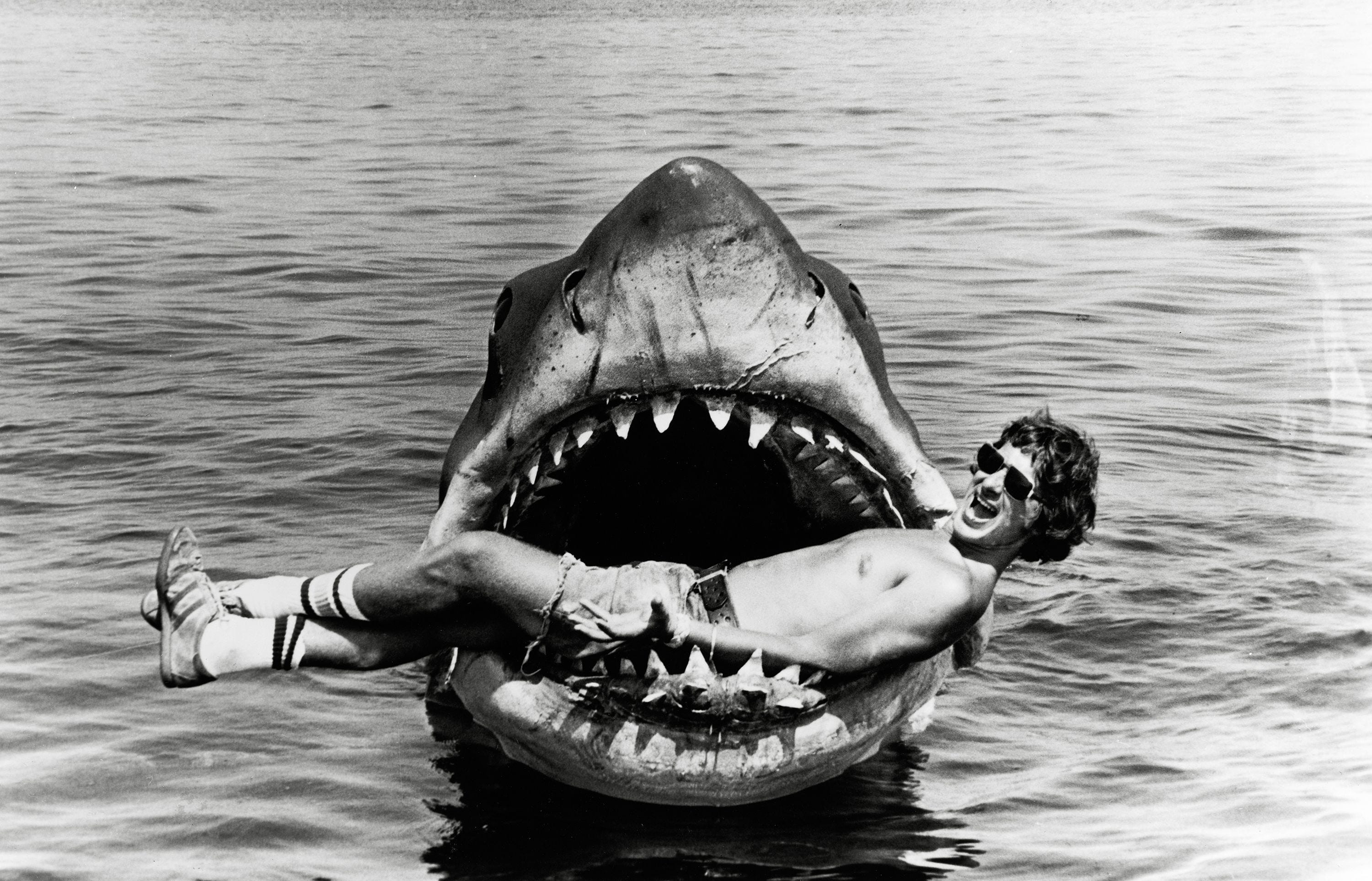
After watching Jaws for the first time (and in the cinema!), I only have this humble contribution: Jaws was clearly directed by a guy who wears glasses.
I’m sure there are other films where glasses play a key role to the plot, and sure, glasses do add to the themes and symbolism within Jaws. But I’m not talking about what the glasses mean. I’m talking about how the glasses don’t mean anything and still get the spotlight. Jaws is groundbreaking: never before in film have glasses been given such prominence while interacting with the environment so normally.
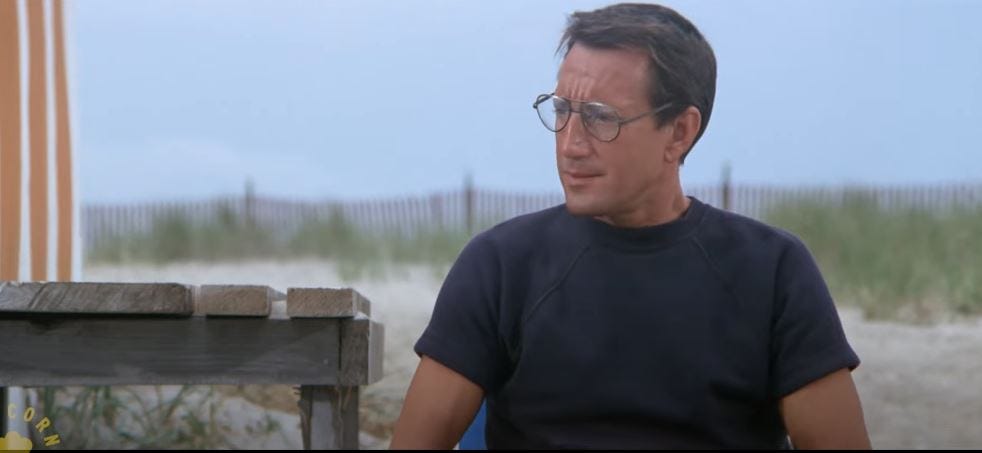
Look at this guy. He’s clearly worried about the beachgoers’ safety, but notice how he sits by the least sandy area? And when a kid inevitably gets eaten, he runs toward the water but stops just at the shoreline. He hates the water, of course, and he sits far enough back that he can surveillance as many people as possible. But mixed up in all of his other thoughts is the inevitable: He’s already got to deal with the sand and he’s got missing children; he doesn’t want to need to clean his glasses on top of all that.
Then he finally goes on the boat—with another glasses-wearer—and what happens before he gets to the dock? His wife lovingly packs an extra pair of glasses. Not that he ever gets to use them.
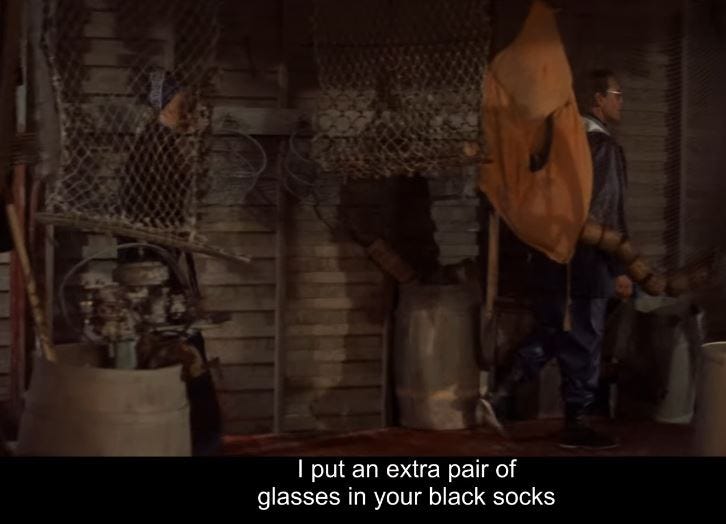
Glasses puts Chief Brody at a distinct disadvantage out on the water by way of being easier to lose. Nothing much results from this exchange in particular, but I’m surprised that it was part of the conversation. Most of the time I see a character with glasses on tv, it’s kind of a copy and paste of a person without glasses. The glasses are invisible—which, to be fair, is how glasses usually are and should be in real life.
But he does lose his glasses! And what a way to lose them! Jumped by the shark with the slickest aim in the world.
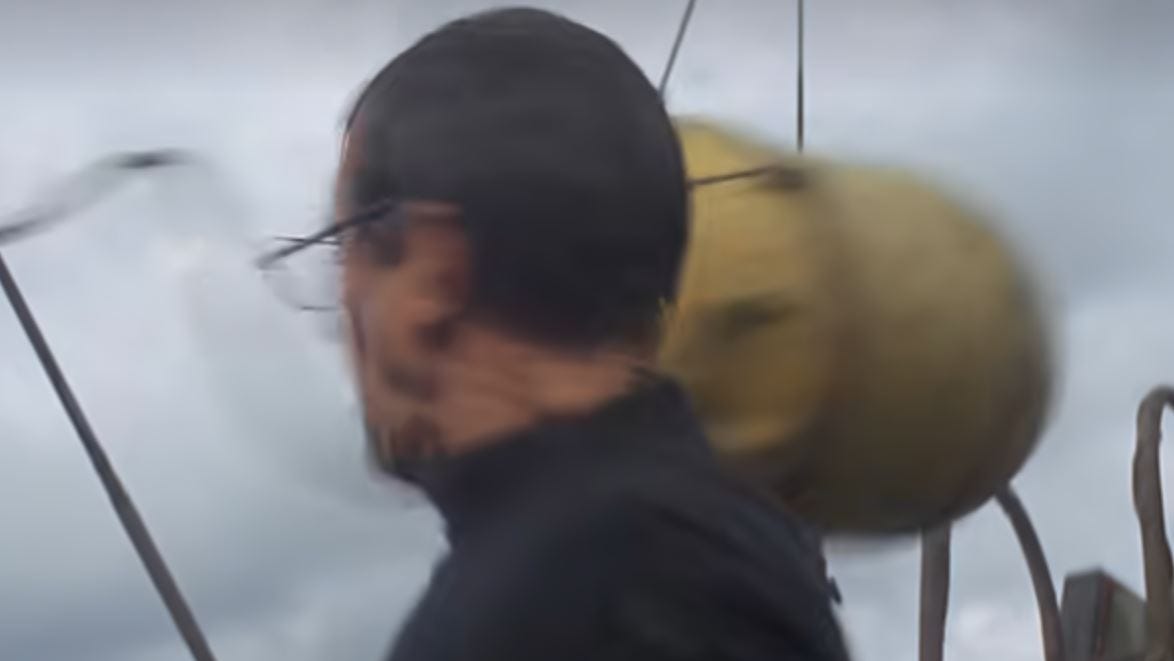
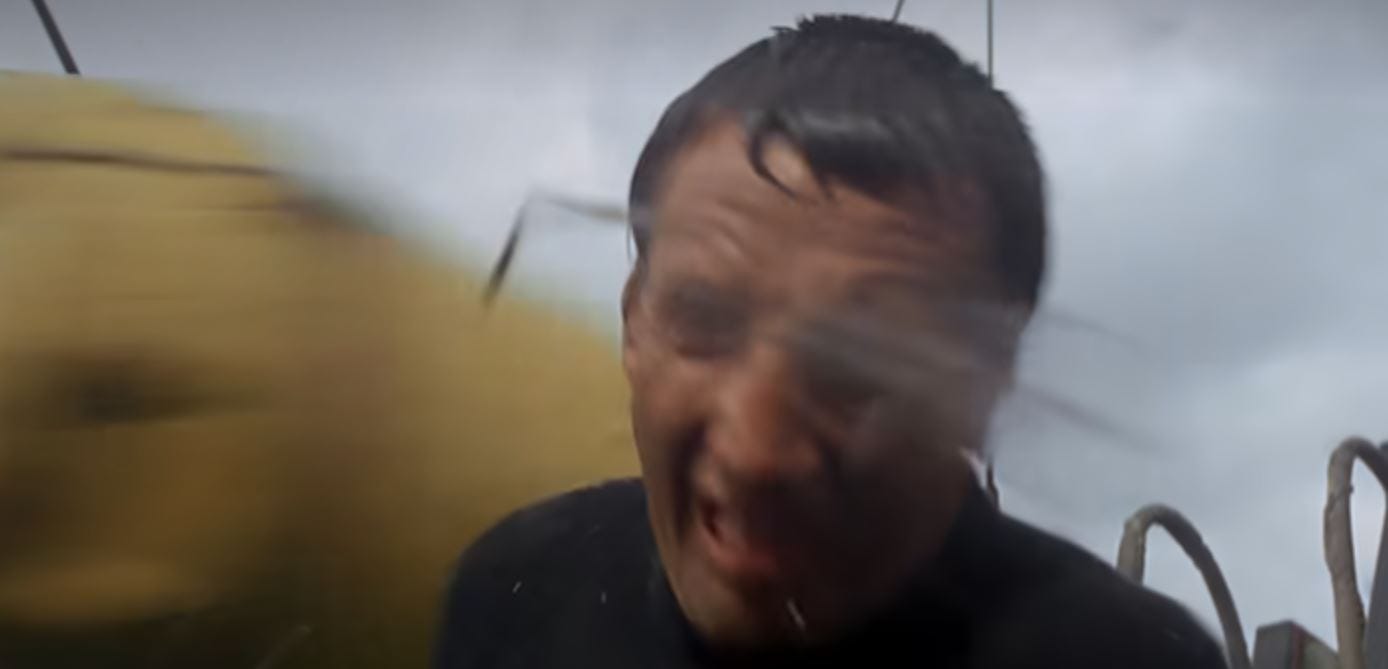
An impressive stunt.
Hazard of the sea and all that. I thought the earlier quote was a Chekov’s gun that would let him find and put on his back-up pair, but he never did. I suspect they were lost when the lower level got flooded.
Two other important glasses scenes occur after Chief Brody loses his own. The first: Chief Brody takes Hooper’s glasses for safekeeping.
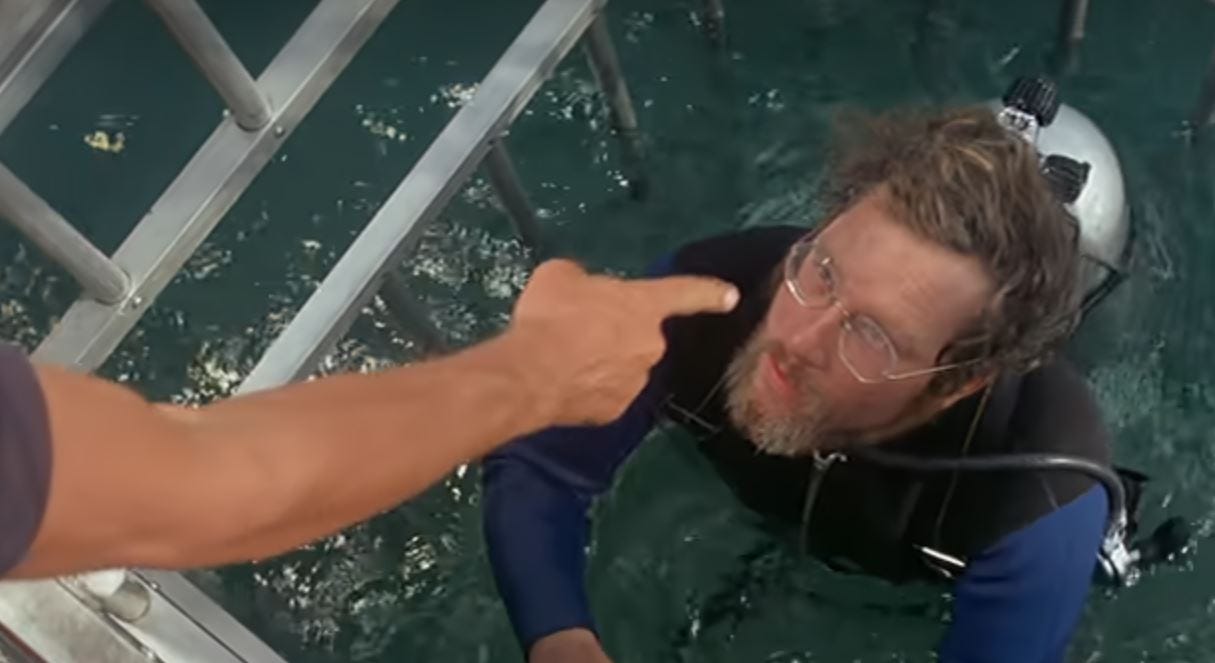
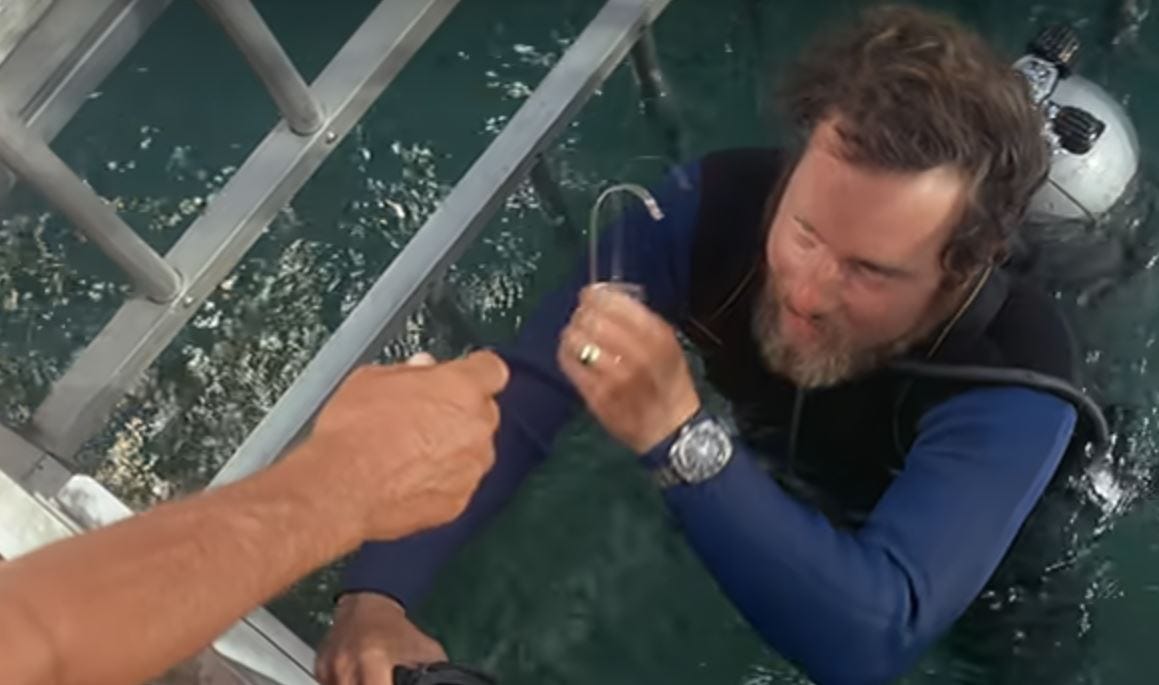
Visual storytelling.
This scene is a good representation of an epic universal glasses moment: forgetting that you’re wearing glasses at all. Who knows what might have happened if Chief Brody didn’t prompt Hooper to hand them over? Who knows. We might not have gotten the ending of Jaws. Chief Brody is a hero.
Chief Brody also treats Hooper’s glasses extremely informally. Apparently this was a choice made by the actor, so I imagine it’s a character quirk, probably similar to how Brody treats his own glasses if his hands are full.
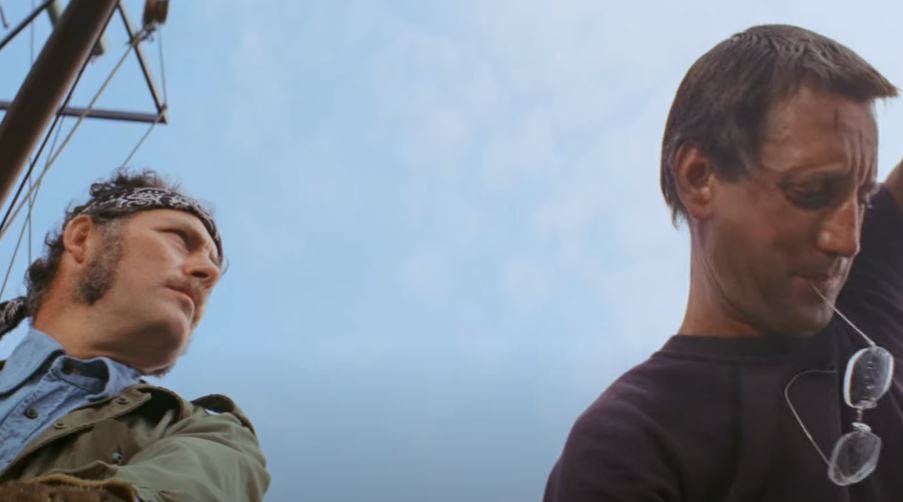
The second glasses-relevant scene is also its climax. Chief Brody shoots the oxygen tank, effectively canonizing himself into the hall of fame for horror/thriller protagonists who defeat their villains.
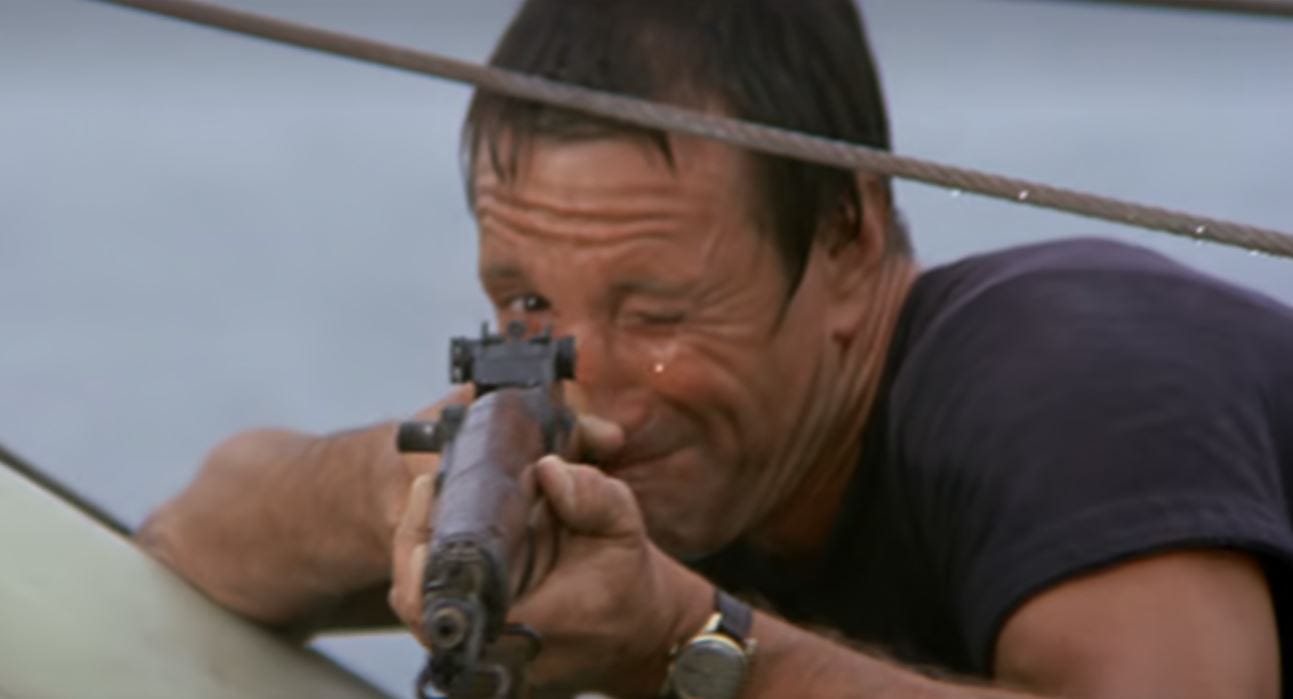
Let me specify: Chief Brody shoots the oxygen tank WITHOUT HIS GLASSES.
He earlier proved himself to be an impressive shot with just his pistol, but this moment here, where he has to hit such a specific target (underwater, I might add), with somewhat blurry vision, really speaks to his skill.1 That’s a difficult target for someone with 20/20. This is the ultimate hero story for the average glasses wearer.
And that’s not all! Spielberg isn’t content to display glasses merely as a normal but interactive part of his characters’ (not so) average day-to-day lives — he has to incorporate it to his vision as the director of Jaws’ visual flair. He allows the glasses to tell a story, if only for a moment. A moment’s enough.
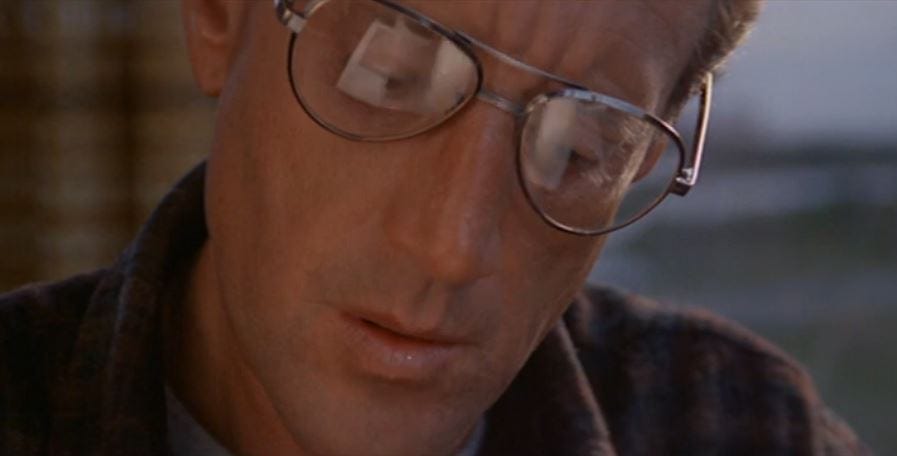
Early on, Chief Brody researches his monstrous aquatic enemy. As he flips through the pages of a book, the images and movement reflect in his lenses. It’s one of the first artistic shots of Jaws, and it startled me. I thought I was getting into a horror movie that’s remembered for spawning a terror of sharks on and off the screen. I didn’t realize I was watching a film that had…well, some very beautiful, artistic visual choices. From that point onward, I was completely invested, paying attention for both the story and other unique shots.
Spielberg included glasses in both the art and plot of Jaws without making it an important part of Jaws. Chief Brody didn’t need to have glasses. It didn’t particularly affect his character decisions. But he did have glasses, and Spielberg made sure that that aspect of his character wasn’t forgotten.
A while back, I wrote an article about the scarcity of heroic left-handed characters in media. Spielberg treated glasses-wearers the way I want to see a left-handed protagonist portrayed. A mostly unimportant aspect of the story, but precise in how it is presented.
And of course, disregarding the glasses, Jaws’s ability to thrill and invest and tell a good story 50 years on is inspiring. Happy 50th, Mr. Jaws.
A short note: evidence

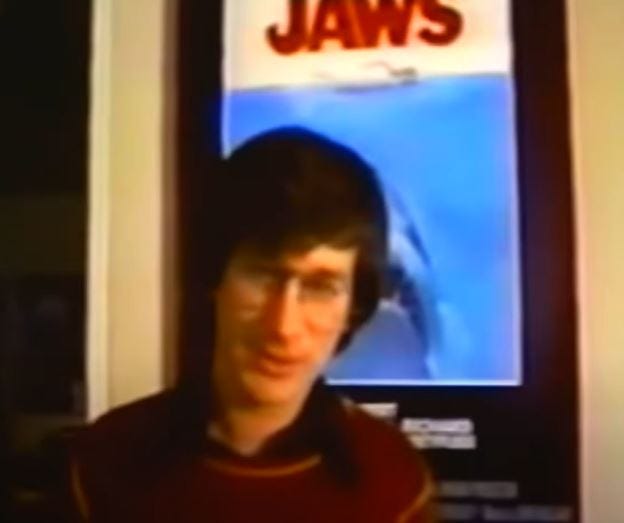
Steven Spielberg, 1976 and 1975, respectively.
As the whole post hinges on the idea that Spielberg was a glasses-wearer, I thought it important to find evidence that he wore glasses back then. Most of the images from the actual set of Jaws show Spielberg wearing either no glasses (especially when he was looking through the camera) or sunglasses. The Jaws documentary The Shark is Still Working, however, included several home videos from 1975 and 1976, and he wears glasses in those.
In conclusion: Jaws was directed by a guy who wears glasses. He just might not have worn them on the set.
It’s never specified how high Chief Brody’s prescription level is, but I’m assuming it’s not too severe. There is one shot that shows the boat from his perspective right after he loses the glasses, and while the others look blurry, you can still clearly make out the image all the way to the end of the boat. I tried looking up what the vision standards were for policemen at the time, but I couldn’t pinpoint specifics beyond it being slightly less strict than today’s. If anyone has information for 1970s policemen vision standards, I’d be interested to know (mostly out of personal curiosity at this point).